Drivers Motif Xs6 Pictures
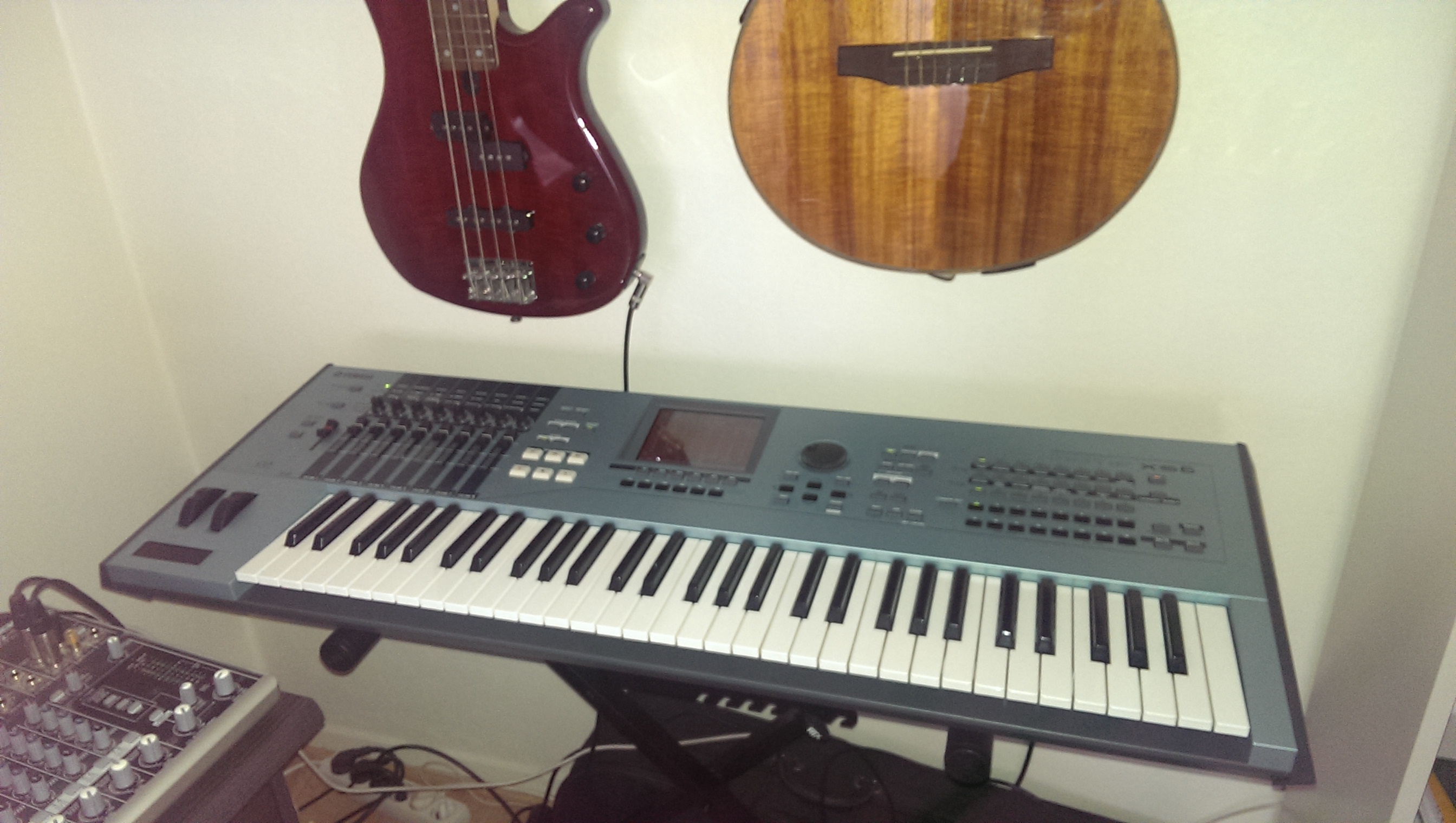
Motif XF USB-MIDI Quick Setup Guide for Windows What you can do: USB is MIDI only between the Motif XF and the computer, you can do all things possible with a MIDI multi-port connection: • Record and Edit MIDI data to a DAW (Digital Audio Workstation) software, like Cubase • The 'Score' feature allows you to do music notation • Work with the Motif XF Editor Standalone/VST • Manage and Edit your sounds Install “Cubase AI” on your computer. A free copy of Cubase AI (or download Access Code) was provided with the original purchase of a Motif XF.
MOTIF XS AI Driver V113 Mac OS X Universal Binary. Related Images 'Motif xs6 driver mac' (527 pics). MOTIF XS AI Driver V113 Mac OS X Universal Binary. Yamaha Steinberg FW Driver V for Mac OS X 10 YAMAHA MOTIF XS6 Pilotes pour Carte son YAMAHA MOTIF XS6. Microsoft’s New Windows 8. Motif: Rebuilt and Re- Imagined. It’s not a secret anymore that Microsoft is betting big on Windows 8. OS to boost sales of the rather.
Installing, activating and registering your copy is well worth the effort. Download and Install the following software by going to the Motif XF download site. Download and install the latest “Motif XF Extensions version 1.1.1” (or later) Download and install the latest 'Motif XF Editor Standalone/VST version 1.6.4' (or later) Download and install the 'Yamaha USB-MIDI driver' version for your particular computer type; there are different versions for 32-bit and 64-bit operating systems. Current is “Yamaha USB-MIDI driver version 3.1.3” (or later) Because the editor uses multiple ports to connect with the Motif XF, you MUST use either USB (or Firewire) to utilize the editors.
Translation: Regular 5-pin MIDI cables will not work. Connect via USB Connect the Motif XF to your computer via USB. Set the Motif XF to MIDI IN/OUT = USB • Press [UTILITY] • Press [F5] CONTROL • Press [SF2] MIDI • Set MIDI IN/OUT = USB • Press [STORE] to write this to your Flash ROM Launch Cubase AI • Click DEVICES • Select DEVICE SETUP • Under the “MIDI” folder highlight “MIDI PORT SETUP” • You should see your Motif XF(x): Example below uses a Motif XF7 • Select Motif XF(x)-1 as the “In ‘All Inputs’” (where ‘x’ is your Motif XF model 6, 7 or 8) Additionally, you may mark port 3 (as shown) if you have another MIDI controller connected to the Motif XF’s MIDI IN jack. You do not have to worry about the “State” (Active/Inactive) as this is only a current status report. You do not want to have Yamaha Motif XF7 Port 2 marked in the IN ALL INPUTS column as this is reserved for REMOTE CONTROL functions. If you have another controller keyboard plugged into the MIDI IN jack of the XS, you could possibly activate Port 3. The “In ‘ALL INPUT’” function is for your keyboard or MIDI controllers only.
• Under the “Remote Devices” folder highlight “Yamaha Motif XF” If it does not appear click on the big “+” symbol in the upper left and ADD the “Yamaha Motif XF” device. • Set it to Port 2 (YAMAHA MOTIF XF7 Port2) for both MIDI IN and MIDI OUT If you are using an audio interface connect that now under the “VST Audio System”. Your audio interface maybe different or you may not yet have one at all use the driver that is appropriate for your interface. If you are only recording MIDI you do not need an audio interface (in which case you can skip this step). • Click APPLY • Click OK Setup the Motif XF Editor (Standalone) The version of the EDITOR after 1.6.0 can be run as a 'standalone' Editor which means without a host DAW, or it can be run inside your DAW if it is VST3 compatible. To launch it as a 'standalone' simply double click its icon in your APPs area or drag a copy of the icon into your START field for quick access.
Again you would only use this in Standalone mode when you want to EDIT your Motif XF and do not want to launch your DAW, or if your DAW is not able to run VST3 Plug-ins. The SETUP screen for Standalone operation is slightly different from the SETUP screen for VST use (Both are shown below) Double click the Motif XF icon and the Motif XF VST graphic interface opens: • Click on FILE >SETUP on the Motif XF Editor toolbar Here you want to setup the communication between the Motif XF and the Editor. • Select USB as the DATA PORT • Set the DETAIL = ON Make settings for Port 1 and Port 4. The USB connection requires a two-way, two port communication. Port 1: Motif X7 Port 1 for both MIDI IN and MIDI OUT Port 4: Motif XF7 Port 4 for both MIDI IN and MIDI OUT To launch the Editor as VSTi (within CUBASE) Launch Cubase first. Go to DEVICES >VST INSTRUMENTS >click on a space “no instrument”, select EXTERNAL >Motif XF VST You will be asked if you want to create a MIDI Track assigned to this plug-in. When this is done you can navigate to the FILE >SETUP screen Next you make a decision about the direction of communication.
There are two things to consider: • When you open a New Project in Cubase, how do you want the Editor to behave? Satyamev Jayate Season 2 Episode 3 Download there. • When you open a previously saved Project, how do you want the Editor to behave? Typically, when you create a New Project you will want the Editor to clear a new MIX for you. Therefore you will want to have data sent FROM the Editor TO the Motif XF.
When you are restoring a previously saved Cubase Project you will want the Editor to send your saved data back to the Motif XF. Therefore you will want to have data sent FROM the Editor TO the Motif XF. As you can see I have the Auto Sync Setting set to CURRENT = PC >Motif XF This is so that the Total Recall will send the Current MIX from the computer to the Motif XF when I open a Cubase Project. Restoring my Mix to my Motif XF. It will do the same thing when I create a New Project. I have the VOICE option set to OFF, as I don’t often need to reload all the User Voices (but you can set this as your prefer). If set to ON, then the Editor can restore all your USER1, USER2, USER3, USER4 and USER Drum Kit Voices to your Motif XF each time.
It is your choice. Since Voice data always remains in the memory of your Motif XF hardware, there is really no reason to restore the Voices data at each re synchronization. Being that it only happens on the rare occasion, we recommend leaving the VOICE option = Off. Auto Start is ON Set the USER INTERFACE SETTING as you prefer. The Keyboard Velocity function when set to “FREE” will change how loud the note plays by where on the keyboard icon KEY you click.
This is pretty cool • Click OK On the main Motif XF Editor screen you want to make sure that the Editor is ONLINE. A bright dot appears next to ONLINE when you are communicating. In the left upper corner you will see the Modes: VOICE, SONG and PATTERN followed by the 'ONLINE' radio button. Communication is bi-directional and simultaneous so selecting the mode here will change your hardware and vice- versa. The ONLINE option has 3 status conditions. It will read either: *ONLNE w/dot – This means you are communicating and all is well *OFFLINE w/ dot – you are temporarily offline but all is well OFFLINE – you have trouble.
Please check your connections The OFFLINE w/dot indicator is important because you will at some point need to make changes on the hardware and not have the software follow you. This can occur when you are looking for a SONG or PATTERN already in the Motif XF – the Editor will attempt to synchronize each time you scroll through a song. Therefore it is useful to click this option when you want to temporarily break communication. You can click ON and OFFLINE as necessary.
If you change modes and go to VOICE mode or to PERFORMANCE mode on the Motif XF hardware front panel, the Motif XF Editor will go temporarily *OFFLINE w/dot. On the Toolbar of the Motif XF Editor you will see the BULK option. This is what you use to request a bulk to (Transmit) or from (Receive) the Motif XF. You can select the Current MIX, and any of the USER Banks or ALL of the USER Banks. This is significant because you will want to keep a backup of the current LIBRARY loaded into your hardware at the time of this Project. Do not change your preference in the FILE >SETUP >AUTO SYNC SETTING – when you need to send or receive data from the Motif XF use this BULK option.
This is what it is designed for. Click BULK >DATA SYNC Highlight 'Receive' Check the attributes you wish to capture Click OK to execute. This data will be bundled and Saved. If you are running in 'Stand alone' mode, save a Motif XF Editor file (.X3A) If you are running as 'VST' the XF data will automatically be saved and bundled with the host DAW's Project file.
In Cubase this will be a (.CPR) type file. • In Cubase AI click on the FILE option • Select 'NEW PROJECT' • Select 'EMPTY' You can use any of the pre-made Templates or you can create your own.
Ultimately, you will want to create your own once you develop a preference of how you like to work. Cubase will ask you to select a directory for your Project. You can 'create' a folder or simply target one you have made previously. Next you will create a track layout. This will be your own personal preference. For our example we will create a Track setup with 8 MIDI Tracks (you can set as many as you require).
Remember you can easily add tracks or remove tracks in Cubase by simply right clicking and using the ADD TRACK or REMOVE TRACK option. • Right click and select 'ADD TRACK' >MIDI • Make the Track Count 8 • Click OK Each of the eight tracks will be set to 'All MIDI Input' and as we know this is the Motif XF port 1. Each of the eight tracks will be routed out to the Yamaha Motif XF, and each will be on a successively higher MIDI channel. Next click on FILE >SAVE AS TEMPLATE.
Name the template something descriptive. I named mine 'Motif XF USB 8 MIDI'. It reminds me that this template is for when I'm working with the Motif XF (in my studio I need this information). I include USB in the description because this template will configure my connections via USB; I have a separate template for when I am working with the firewire connection. The '8 MIDI' reminds me how many tracks are in this template and what type of tracks.
As you get to know your working habits you can refine you Template. You can even pre-select VOICES for the PARTS, if you desire. If you are using a particular Audio Interface, you can select the output assignments for your XF PARTS. Duniya Banane Wale Kya Tere Mp3 Song Free Download. For example, if you are not using audio, or you are connected to an external audio interface via two 1/4' cables, you will want to set the OUTPUT SELECT parameter for each Part = L&R (the individual outputs are for those using the optional FireWire connection. Try out your TEMPLATE Click WINDOW and select 'Close All' • Go to FILE >New Project. • Click on your new Template • Select a directory for this project • Click OK to launch your Template It will recall your USB connections, your REMOTE Settings, your audio interface settings; recall the hardware configuration, recall the MIDI connections, and recall the Current Mix and Voices if you included them. It will then ask you if want to restore this to your hardware.
Why this extra step? Because at some point you may actually start a project in the Motif XF – say you have a quick idea and want to get it down fast. Later you say I'd like to continue my work in Cubase rather than having the Editor automatically blow away your hardware settings, you get this screen that lets you verify that you want to go FROM or TO the Hardware. If you have done a setup in the Motif XF and you want to have the Editor capture it: simply select 'FROM HARDWARE' option. If you want to send your basic start up template select the 'TO HARDWARE' option. You can customize these instructions to your own preferences. Perhaps you always start with a particular Drum Kit, Bass sound and Keyboard sound; you can make your TEMPLATE that includes the Motif XF Editor with the Voices you like already programmed and assigned to the appropriate outputs.
Advantage and Conclusion The Studio Connection: Recall protocol allows you to store and recall your external hardware settings in your Cubase Project File. The Editor will memorize every setting on the external hardware you were using on a Project, it will store not only the Voice list but also the entire mix. That is, every parameter you use, and every Voice in your Motif XF, per project. This is total recall.
Recording Number of Songs 64 Songs Mixing Voices: 16 Voices per Song and up to 256 Voices for all Songs Mixing Templates: 32 for all Songs and Patterns Number of Tracks Pattern: 16 Phrase tracks Pattern Chain: Pattern track, Tempo track, Scene Song: 16 sequence tracks (Loop on/off can be set for each track), Tempo track, Scene track Number of Phrase User Phrases: 256 per Pattern Number of Arpegio Preset: Approx. 6,000 types User: 256 types *MIDI Sync, MIDI transmit/receive channel, Velocity Limit, and Note Limit can be set. Number of Pattern 64 Patterns (x 16 sections), Measures: 256 maximum Mixing Voices: 16 Voices per Pattern and up to 256 Voices for all Patterns Mixing Templates: 32 for all Songs and Patterns Data Capacity Approx.
130,000 notes Number of Polyphony (Max.) 124 Note Resolution 480 ppq (parts per quarter note) Tempo 5 - 300 Recording Function Real time replace Real time overdub (with the exception of the Pattern Chain) Real time punch in/out (Song only) Scene Memory 5 per Song Sequence Format Original format, SMF format 0, 1 (Format 1 load only) Sampling. Samples Up to 1,024 Waveforms (Multi Samples) Up to 128 Key Banks per Waveform Up to 4,096 Key Banks Sampling Source Analog input L/R, Stereo output (Resampling), Digital output IEEE1394 (available on the MOTIF XS6 and 7 when the IEEE1394 optional board has been installed) Sampling Time 44.1kHz: 6 min.
22.05kHz: 12 min. 11.025kHz: 25 min. 5.0125kHz: 55 min.
*Mono/Stereo Sampling Frequency Rate 44.1kHz, 22.05kHz, 11.025kHz, 5.5125kHz (Stereo/Mono) Sampling Frequency via IEEE1394 (when IEEE1394 optional board has been installed): 44.1kHz (fixed) Digital Sampling Frequency 16bit Sampling Format Original format, WAV, AIFF Storage and Connectivity. Windows CPU Intel Core or Pentium or Celeron family processor, 1.4 GHz or better with an S400 (400Mbps) IEEE1394 (FireWire) or i.Link terminal (for IEEE1394 connection).*** see column 'Others' Others *** The computer must have an IEEE 1394 (FireWire or i.LINK, etc.) connector for IEEE1394 connection. If there is no connector, please install an IEEE1394 interfacecard (PCI or PC). When using a laptop or notebook computer, a built-in IEEE1394 terminal may not be available. In this case, install an appropriate PC interface card.1394 Chip Set Compatible with MOTIF XS IEEE1394 connection with 'Yamaha Steinberg FW driver'- AGERE FW323-05- AGERE FW323-06- TI TSB12LV23 + PHY- TI TSB12LV26 + TSB41AB03- TI TSB43AB22/A- TI TSB43AB23- VIA VT6306*ATTENTIONThe manufacturer may alter the above mentioned Chip Set without notice.
Depending on the change, there's a possibility of it not working properly with this driver.1394 Chip Set NOT Compatible with MOTIF XS IEEE1394 connection with 'Yamaha Steinberg FW driver'- NEC D72873GC- NEC D72874GC- NEC uPD72874 Bundled Software.